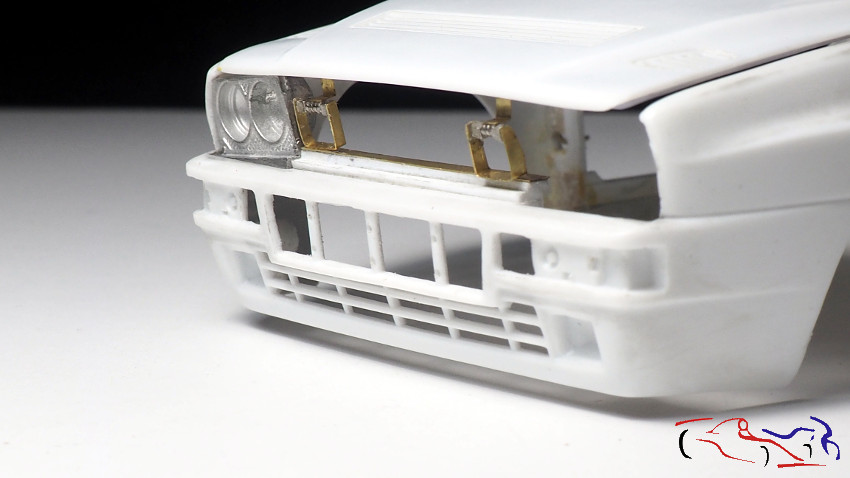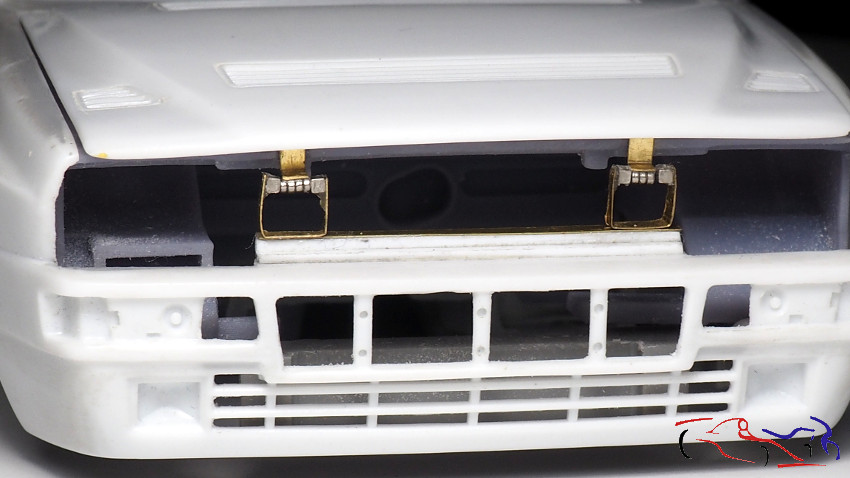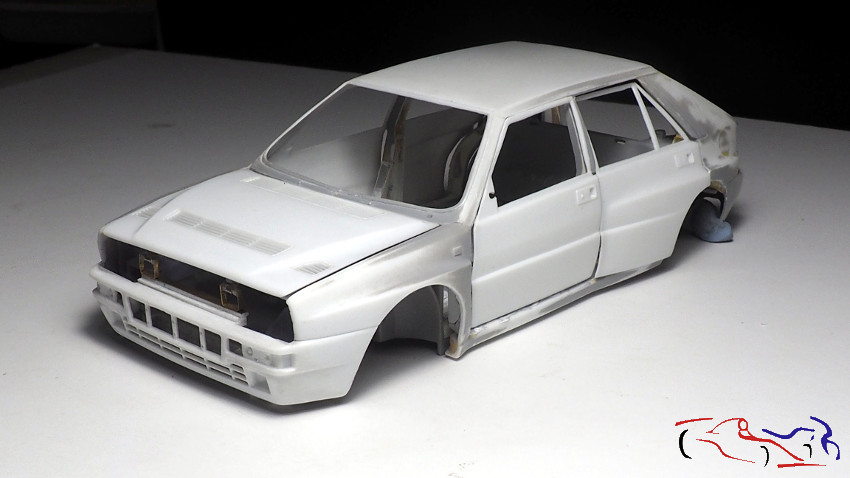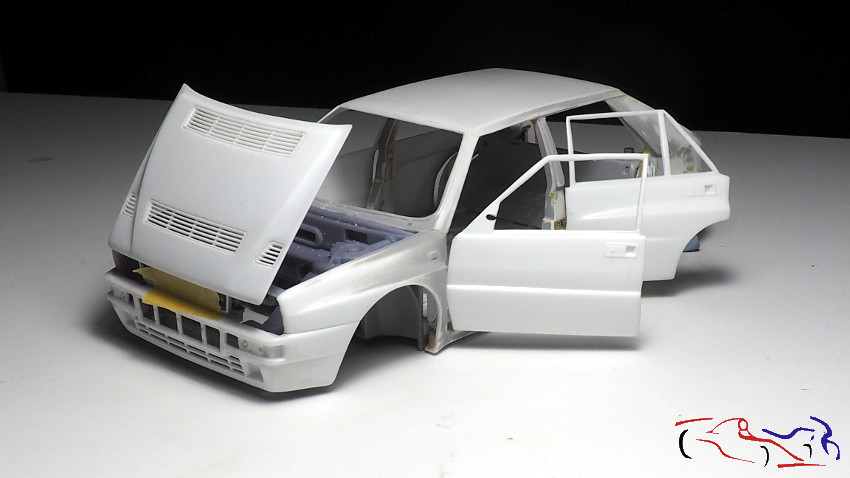
Lancia Delta Repsol 1993 1/24 (#7)

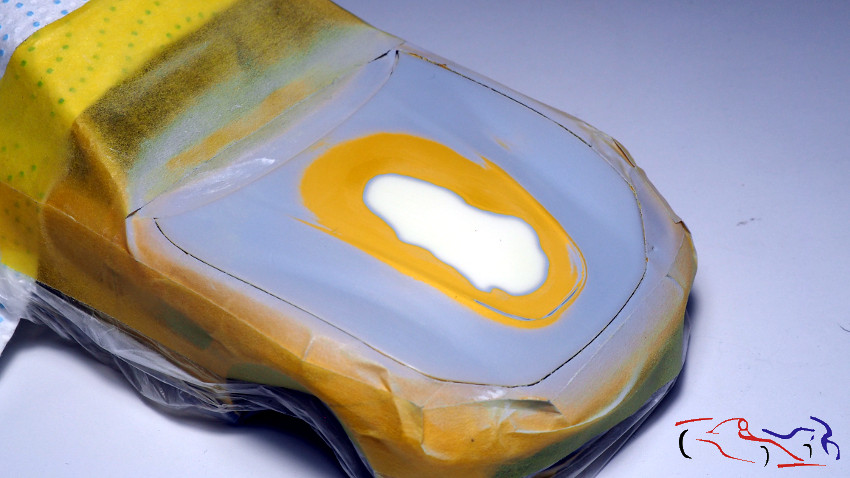
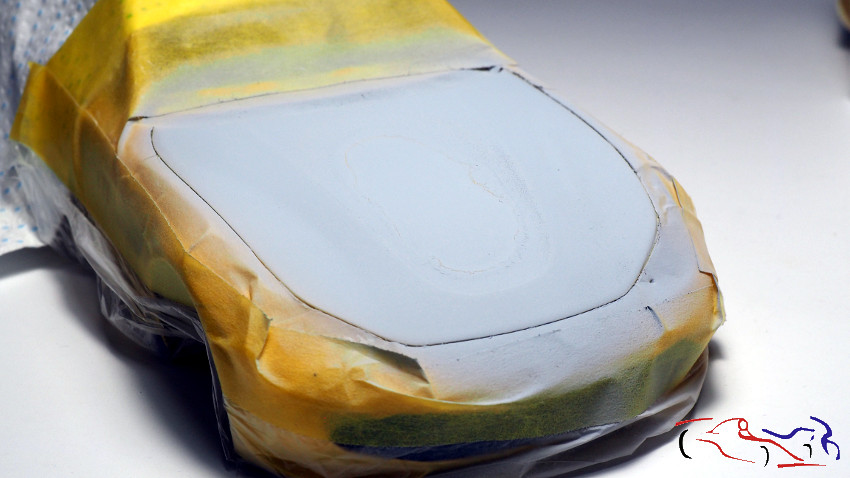
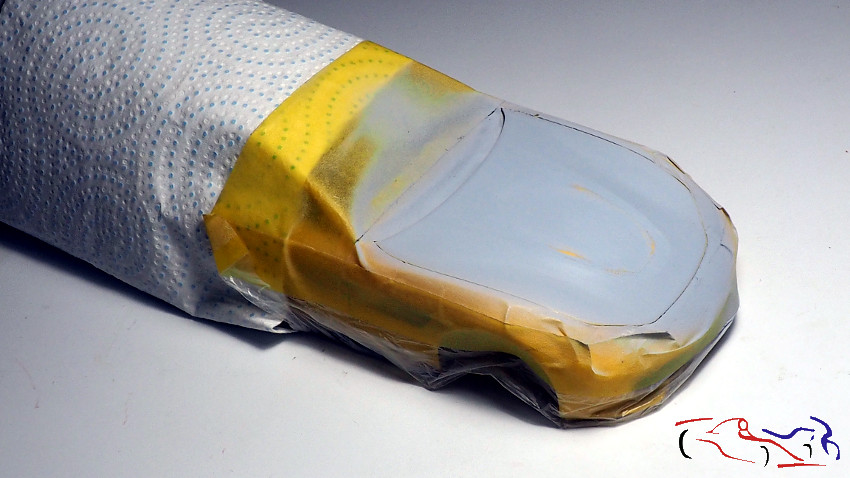
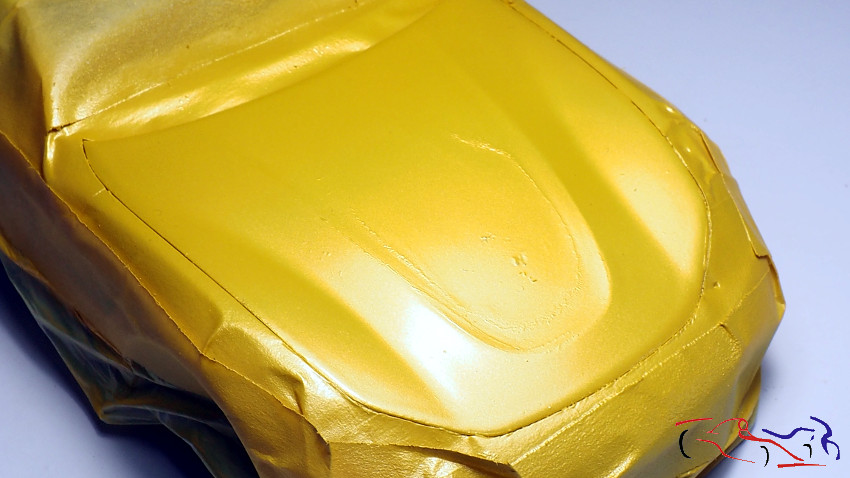
Continuamos con el Lancia, en una etapa sin mucho color ya que el trabajo con cutter, lijas, limas, pegamentos, masillas e imprimaciones, lo máximo que podemos tener es el gris de la imprimación o el amarillo de las masillas!! Pero se intenta que se ven bien los cambios realizados y las piezas modificadas o nuevas.
We continue with the Lancia, in a stage without much colour because the work with cutter, sandpaper, files, glues, putties and primers, the maximum we can have is the grey of the primer or the yellow of the putties! But we try to make the changes made and the modified or new parts look good.

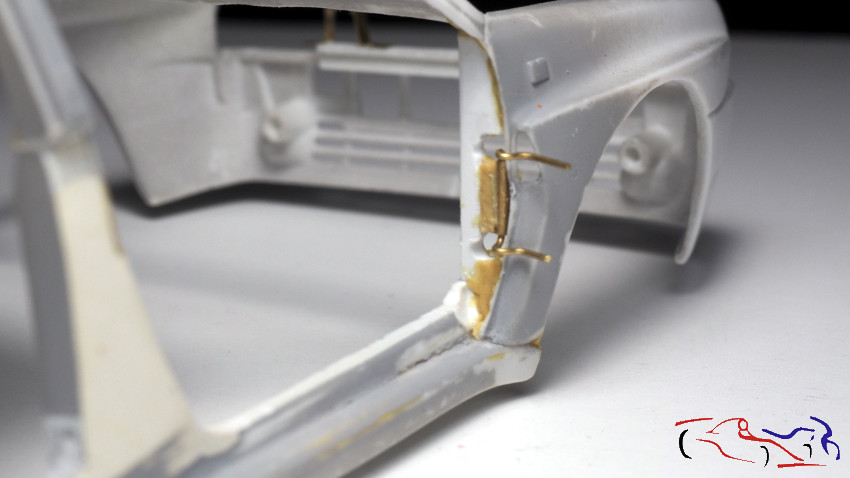
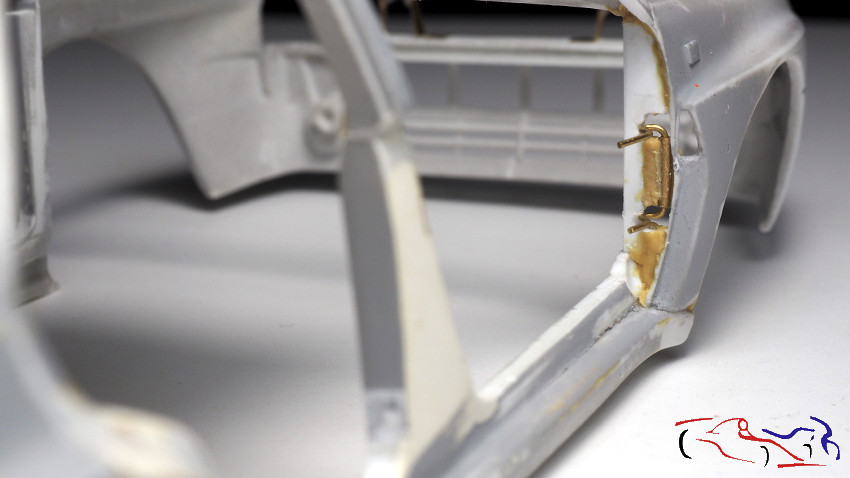
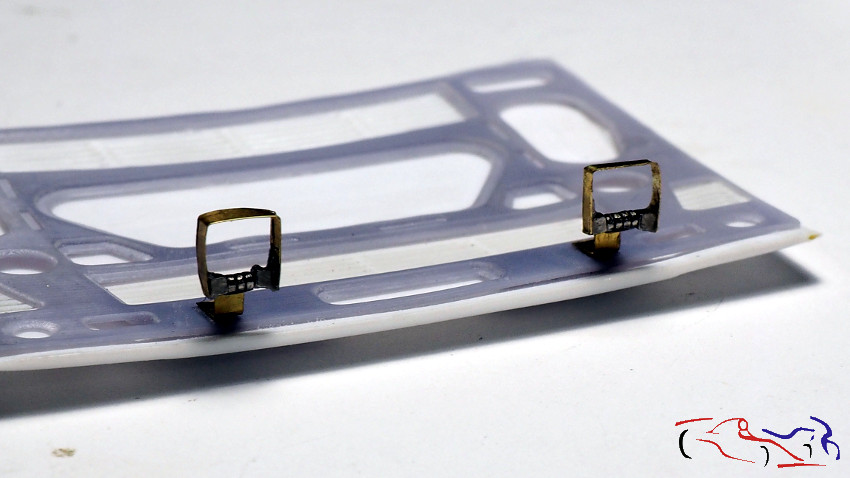
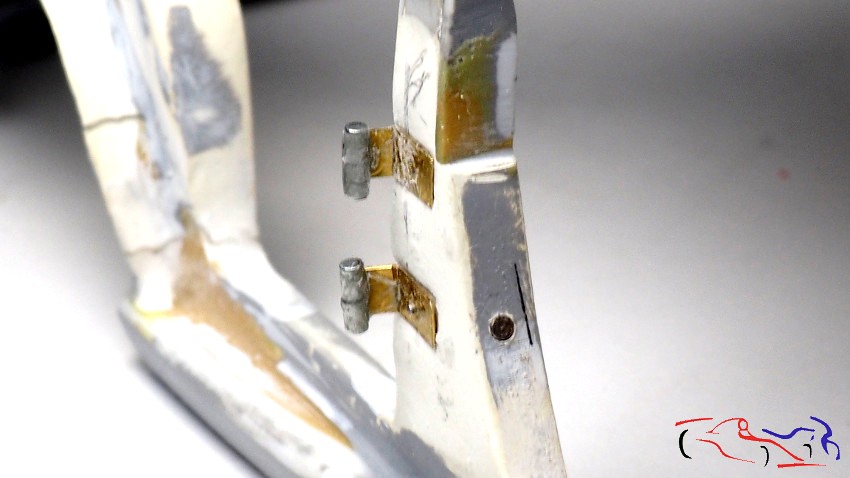
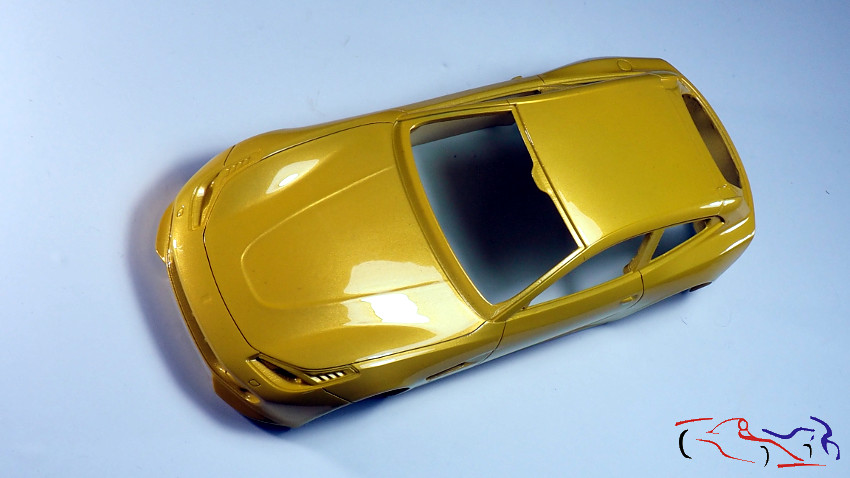
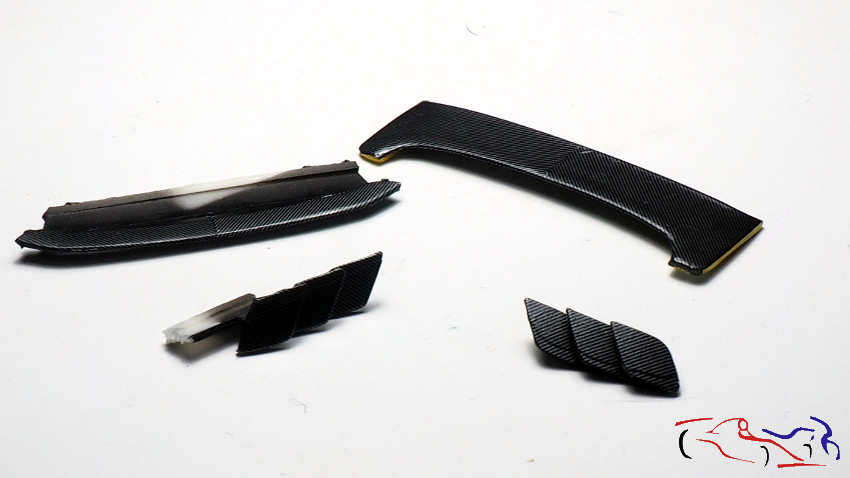
En esta entrada, vamos a trabajar con la parte trasera de la carrocería. Y empezamos con el alerón superior trasero, que lleva el portón. En la siguiente foto, veis la unión original en la parte derecha, y la modificada a la izquierda. Decir que la base triangular del portón se ha rehecho, asi como la fijación propia del alerón, realizada en metal:

In this entry, we are going to work with the rear of the bodywork. And we start with the upper rear spoiler, which carries the tailgate. In the following picture, you can see the original joint on the right side, and the modified one on the left. The triangular base of the tailgate has been redone, as well as the metal fixing of the spoiler itself:

Aquí vemos como la pieza de metal unirá el alerón con el portón. Aun hay que retocar esta parte!!

Here we can see how the metal piece will join the spoiler to the tailgate. This part still needs some work!

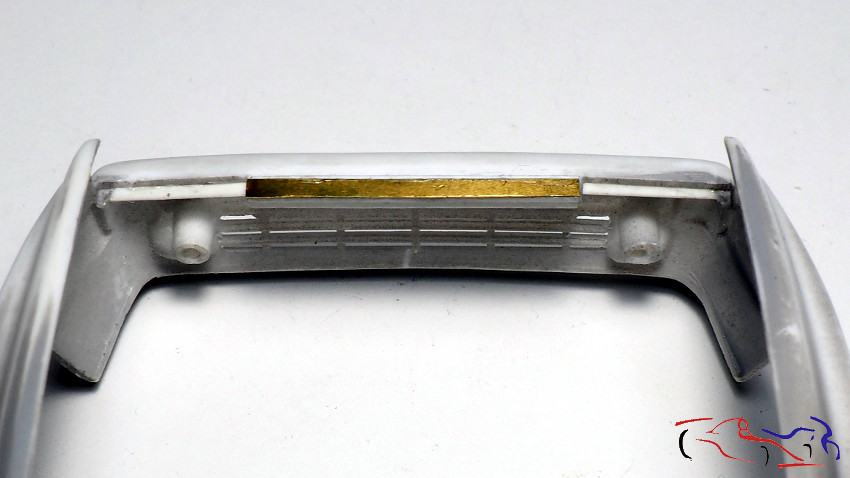
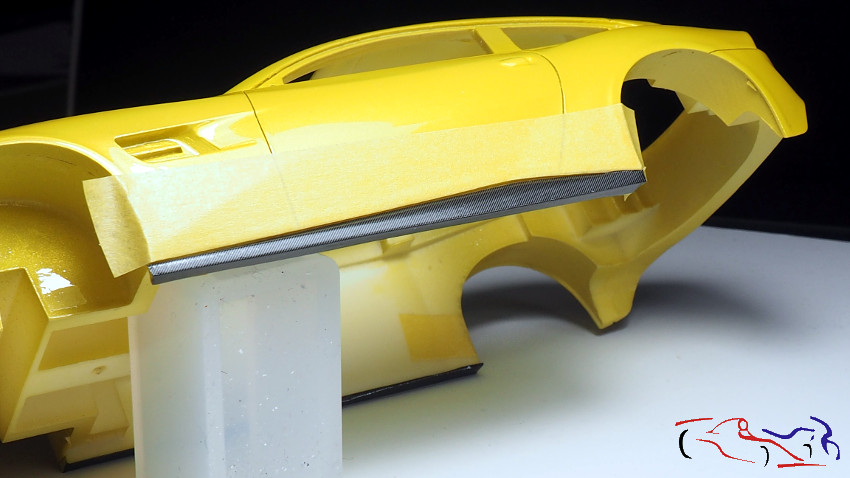
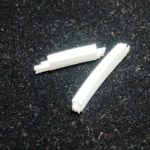
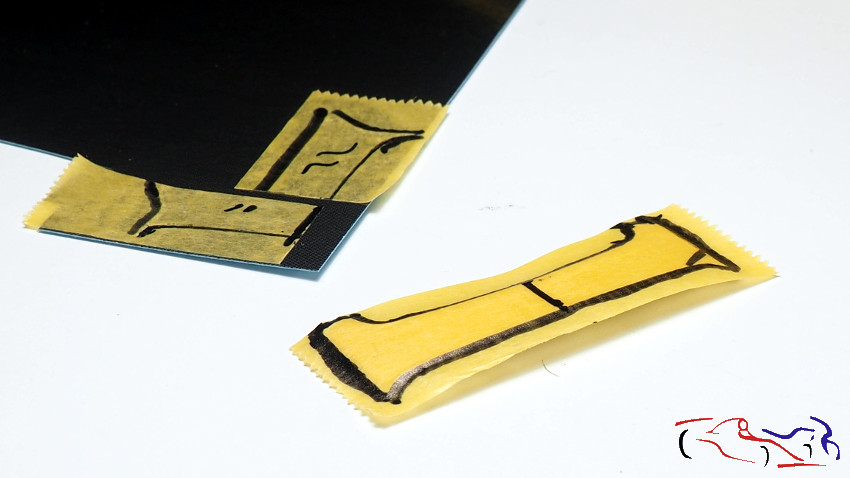
Y siguiendo con la carrocería, el portón se apoya sobre una guía que recorre toda la base, con una ligera curvatura. Cogemos un listón cuadrado, lo cortamos y lo fijamos con cinta para darle la curvatura necesaria. En ese punto, le ponemos una gota del pegamento Extra-thin de Tamiya, en la parte exterior de la unión, donde no hay cinta. Una vez seco, quitamos la cinta y reforzamos la unión con más gotas de pegamento, verificando con el portón y las luces, que todo encaja bien.

And continuing with the bodywork, the tailgate rests on a guide that runs along the entire base, with a slight curvature. We take a square strip, cut it and fix it with tape to give it the necessary curvature. At this point, we put a drop of Tamiya Extra-thin glue on the outside of the joint, where there is no tape. Once dry, remove the tape and reinforce the joint with more drops of glue, checking with the tailgate and lights, that everything fits well.

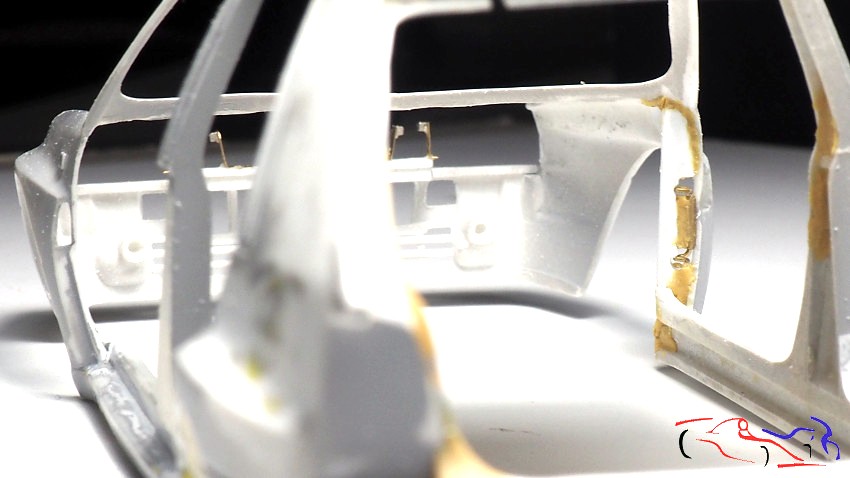
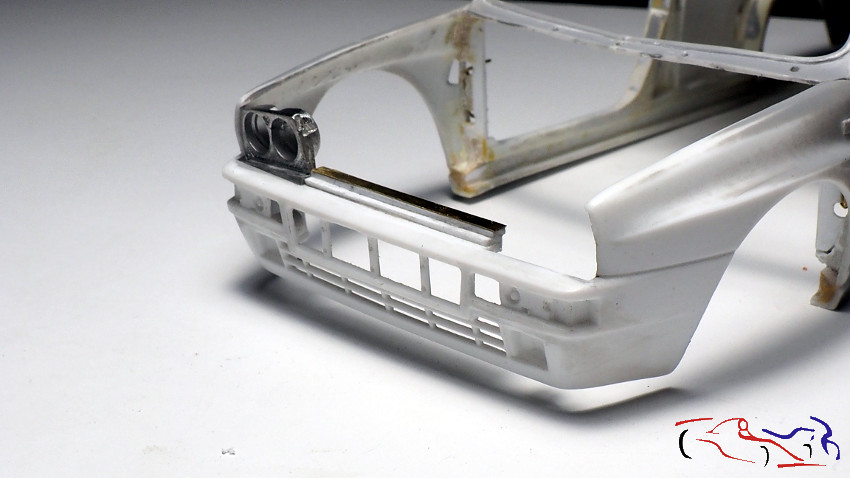
A continuación, añadimos dos listones en los extremos ya que ahí, el ancho aumenta, y le ponemos masilla epoxy Tamiya para dar la forma a la carrocería. Decir que he rebajado estos dos laterales (detrás de los pilotos traseros) de como lo dejé hace cinco años porque me parecían excesivos. En la última foto, vemos como queda con el chasis puesto:

Next, we add two strips at the ends as the width increases there, and we put Tamiya epoxy putty to give the shape to the bodywork. I have lowered these two sides (behind the rear lights) from how I left it five years ago because they seemed excessive. In the last picture, we can see how it looks with the chassis on:

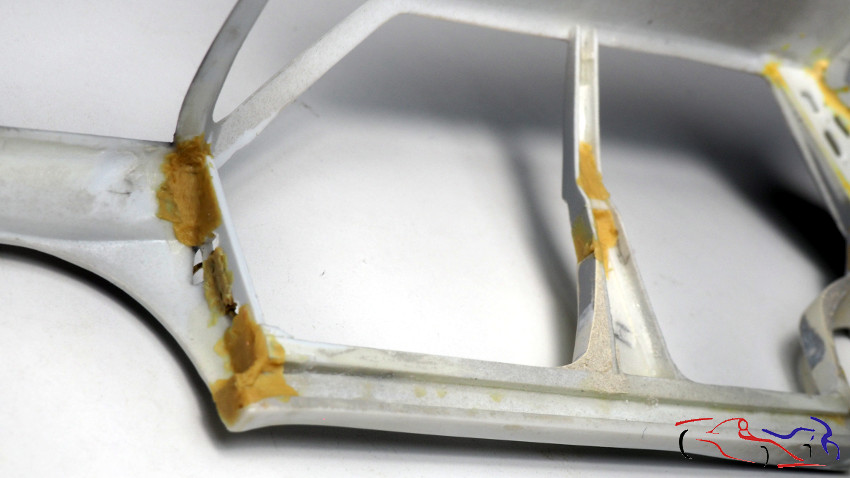
El siguiente paso es rellenar los pilares traseros, tal y como estaban los coches en realidad. No llevaban el guarnecido interior y se veía la chapa de la carrocería, con unos agujeros realizados para disminuir el peso, sin mermar la resistencia. Y después de hacer una plantilla con cartón, dibujé los huecos, los corté, y los pegué en la carrocería en su lugar:

The next step is to fill in the rear pillars, just as the cars were in reality. They didn’t have the interior trim and the body sheet metal was visible, with some holes made to reduce the weight, without reducing the resistance. And after making a template with cardboard, I drew the holes, cut them out, and glued them to the body in place:

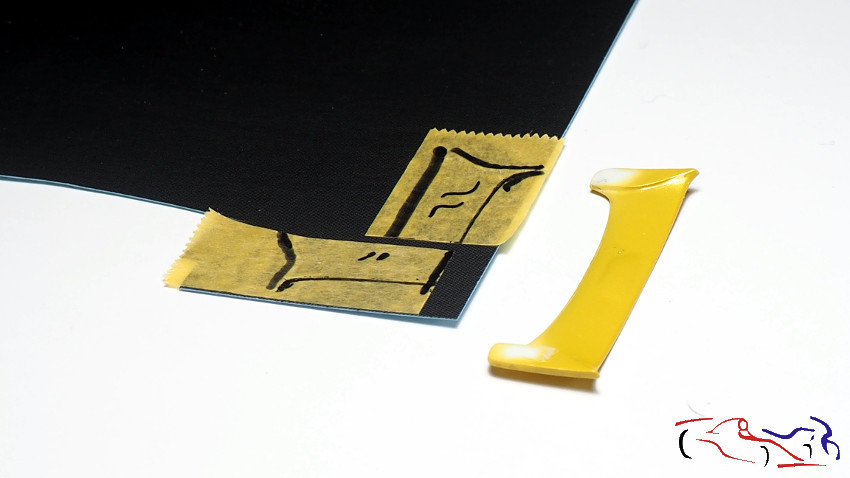
Pero no me gustó el resultado, ya que la lámina era muy fina, y en realidad, se ve que los agujeros tienen relieve, que tiene grosor. Por tanto las despego y hago otras con una lámina más gorda. Y sigo el mismo proceso: pinto los huecos, hago los extremos redondeados con una broca, corto por la tangente de los agujeros, limo, lijo…..Y para terminar, rebajo el canto exterior un poco con limas para darle el efecto deseado de inclinación. Para terminar, le practico unos pequeños agujeros por aquí y allá. Podréis ver, que a la pieza derecha le falta el hueco inferior: esto es debido a que en ese lugar está la toma de combustible. Esta spiezas me llevaron un par de tardes de trabajo!!!

But I didn’t like the result, as the foil was very thin, and in reality, you can see that the holes are embossed, that they are thick. So I peeled them off and made another one with a thicker sheet. And I follow the same process: paint the holes, make the rounded ends with a drill bit, cut along the tangent of the holes, file, sand, sand…..And to finish, I lower the outer edge a little with files to give it the desired sloping effect. To finish, I make a few small holes here and there. You can see that the right piece is missing the lower hole: this is because that’s where the fuel inlet is located. This took me a couple of work afternoons!!!

Una vez pegados, vamos a rematarlos. Para ello, cojo una varilla en ángulo, y la pongo en la unión entre la pieza interior del pilar C y la bandeja del maletero. La fijo ocn dos gotitas de Extra-thin de Tamiya, por la parte de la carrocería. Así, esta pieza hará de tope con el chasis. Y por supuesto, relleno los huecos con masilla Tamiya de poliuretano, de dos componentes. Esta masilla es muy fácil de trabajar, sobre todo cuando está seca a las 24 horas de haberse aplicado.

Once they are glued, let’s finish them off. To do this, I take a rod at an angle, and put it in the joint between the inner part of the C-pillar and the boot tray. I fix it with two drops of Tamiya Extra-thin, on the body side. This way, this piece will be the butt with the chassis. And of course, I fill the holes with Tamiya two-component polyurethane putty. This putty is very easy to work with, especially when it is dry 24 hours after being applied.

En la siguiente entrada, estará toda esta parte ya lijada. Gracias por ver y comentar!

In the next post, all this part will be sanded. Thanks for watching and commenting!

Posted in Lancia Delta Repsol 1993 (1/24) | Tagged , | Leave a comment

Lancia Delta Repsol 1993 1/24 (#6)

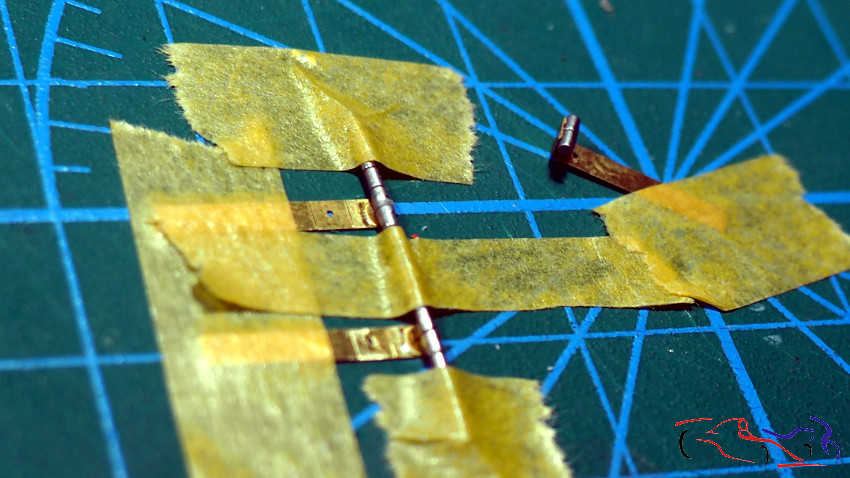
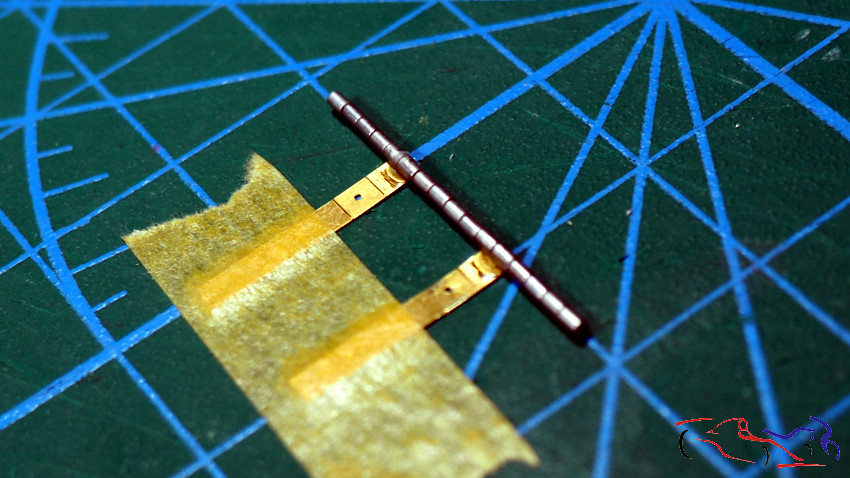
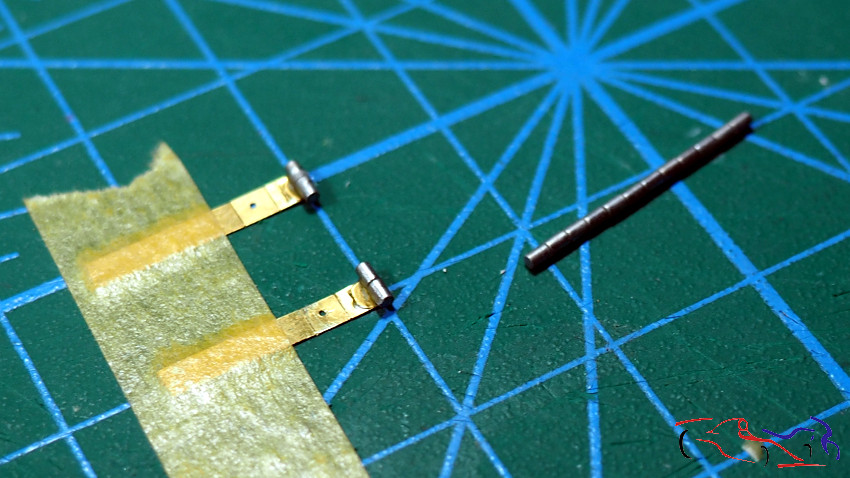
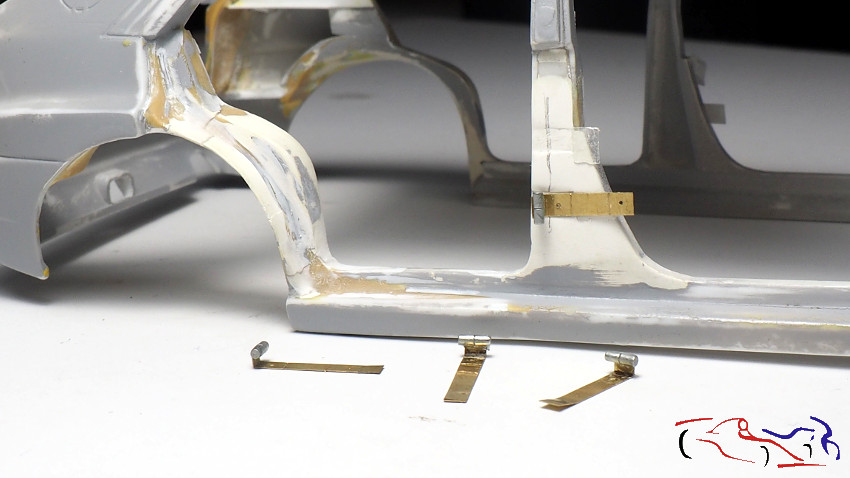
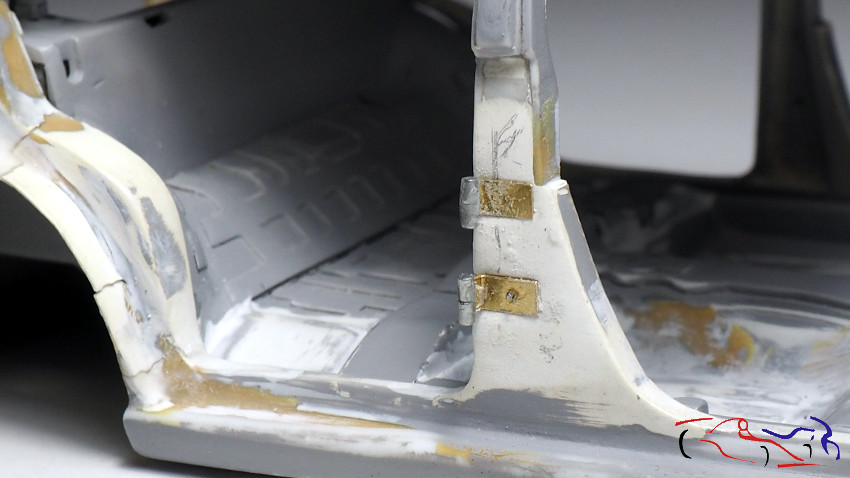
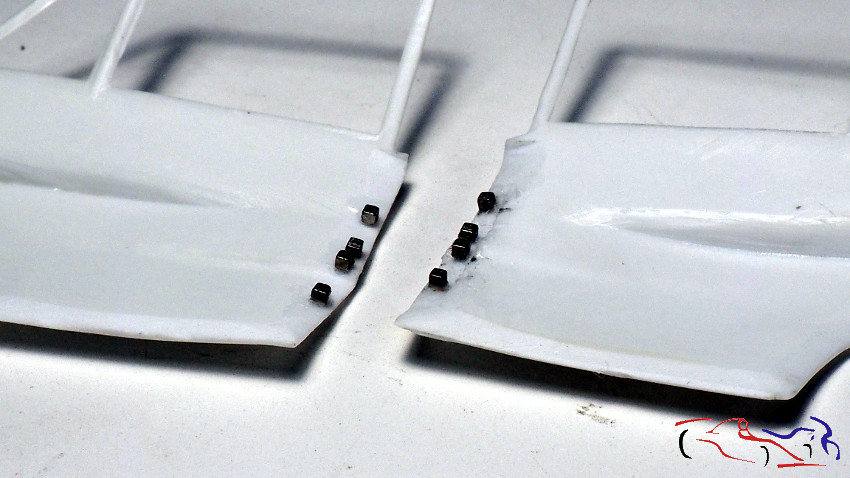
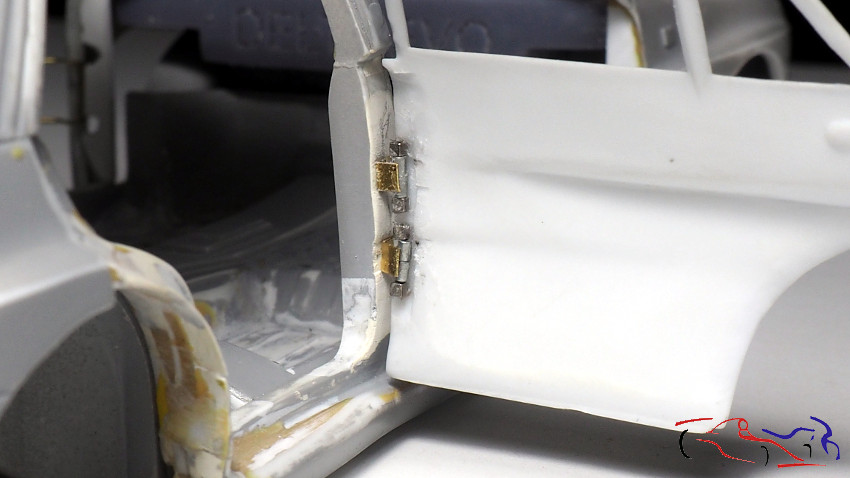
Este proyecto lo dejé en Febrero de 2015, porque no tenía fotos de las fijaciones del motor ni tenía decidido el asunto de las bisagras. Pero puesto que ya se como van dichas fijaciones, gracias mi amigo Borja, que va a salir un motor hecho en resina por mi amigo Claudio de Bellis, y que quiero probar una nueva forma de hacer las bisagras, que ya comentaré, he decidido retomar la contrucción del Lancia Delta!!

I left this project in February 2015, because I didn’t have photos of the engine mountings and I hadn’t decided on the hinges. But since I already know how these fixings go, thanks to my friend Borja, that a resin engine will be made by my friend Claudio de Bellis, and that I want to try a new way of making the hinges, which I will comment later, I decided to resume the construction of the Lancia Delta!

Pero primero os pongo en situación para recordar lo que tenía hecho, y para eso tengo las anteriores actualizaciones de mi blog:

But first I’ll put you in situation to remember what I had done, and for that I have the previous updates of my blog:

Y para continuar, unas fotos actuales: Aquí os muestro el chasis, con parte de la cuna añadida, y modificada con todos sus nervios:

And to continue, some current photos: Here I show you the chassis, with part of the cradle added, and modified with all its nerves:

Y a continuación, la parte del maletero:

And then the luggage compartment:

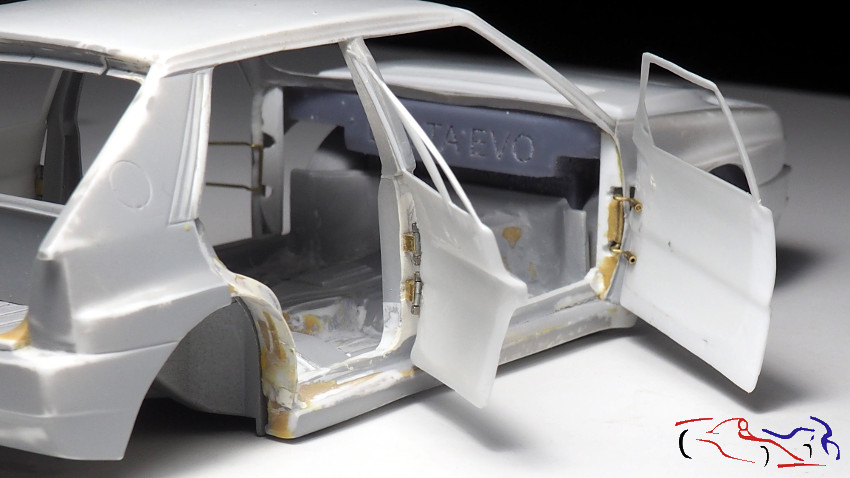
Si pasamos a la carrocería, y una vez abierto todo lo que se puede abrir, os muestro la parte del maletero y de los laterales de las puertas:

If we move on to the bodywork, and once everything that can be opened has been opened, I show you the part of the boot and the sides of the doors:

Y si unimos el chasis y la carrocería, este es el resultado:

And if we place the chassis and the body both together, this is the result:

Mención especial tiene el vano motor, sobre el que se construirá todo, eliminando la parte que se incluye en el chasis:

Special mention must be made of the engine bay, on which everything will be built, eliminating the part that is included in the chassis:

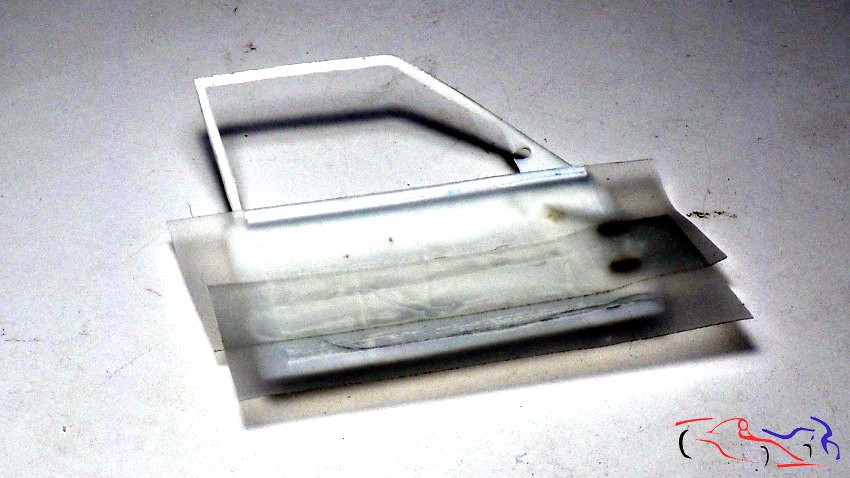
Hasta aquí, lo que ya tengo realizado. Ahora viene lo que empiezo a hacer. Y empezamos por el portón trasero. Lo primero, y para tomar medidas, tengo que recortar la parte del cristal, que viene junta. Para cortarlo, pongo unas tiras de la cinta autoadhesiva Dymo de las antiguas: son suficientemente rigidas para servir de guia para la sierra, quedando cortado en la foto derecha. Después lijaré hasta se ajuste al marco del portón.

So far, what I have already done. Now comes what I start to do. And we start with the tailgate. First of all, and to take measurements, I have to cut the part of the glass, which comes together. To cut it, I put some strips of the old Dymo self-adhesive tape: they are rigid enough to serve as a guide for the saw, being cut in the right photo. Then I’ll sand it until it fits the frame of the gate.

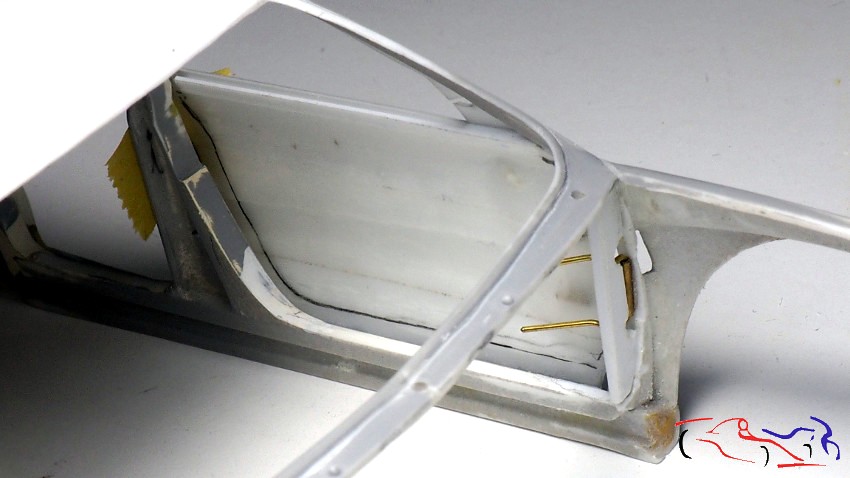
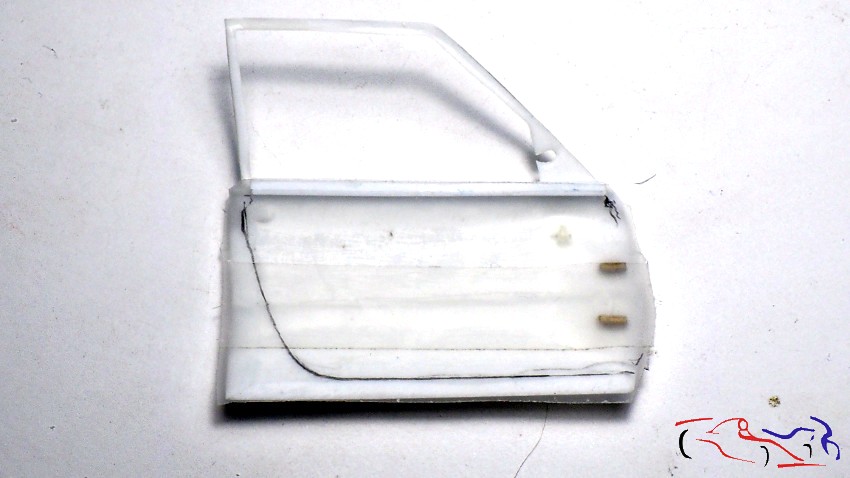
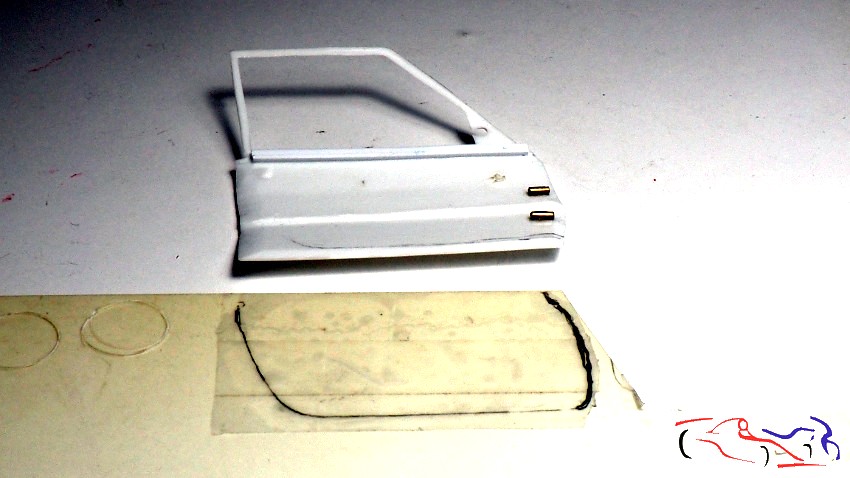
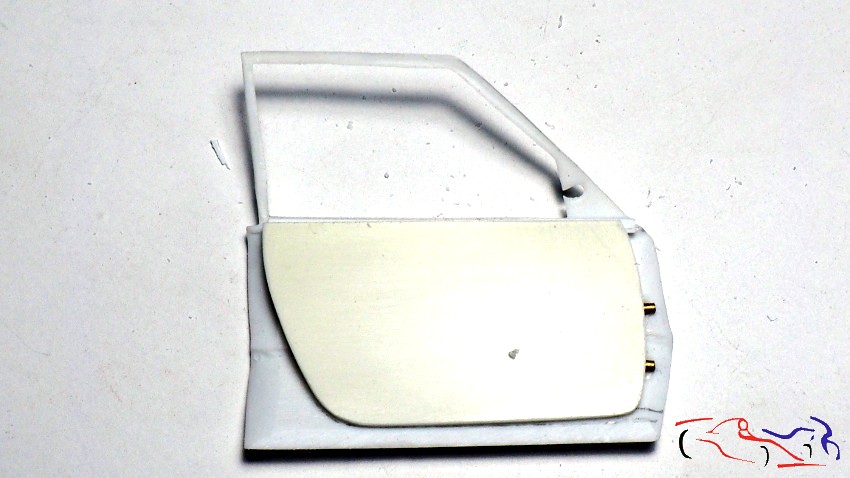
Ahora moficamos el interior del portón, empezando por eliminar los laterales que servían para pegar las luces traseras (dos primeras fotos). Después, con un trozo d eplástico mut fino, lo sujeto al portón, y dibujo los cortes que tengo que hacerle. Y estos cortes se empiezan por las esquinas, con una broca, porque van redondeados, teminando con un corte del cutter entre los circulos. Después se lima todo para afinarlo, y se pega en el portón con unos cuadradillos para dar volumen. Falta ahora, enmasillar los laetrales y lijar:

Now we have to mock up the inside of the tailgate, starting by removing the sides that were used to attach the rear lights (first two pictures). Then, with a piece of thin plastic, I attach it to the tailgate, and draw the cuts I have to make. And these cuts start at the corners, with a drill, because they are rounded, ending with a cutter cut between the circles. After that, the whole thing is filed and glued to the door with some squares to give volume. Now it’s time to putty and sand the edges:

Os pongo esta foto para que veáis el alerón superior, y su fijación, que habrá que modificar y ajustarla a la realidad:

Here is a photo to show you the upper wing, and its attachment, which will have to be modified and adjusted to reality:

Y del portón, pasamos al capót, para mostraros el proceso de creación de los nervios interiores, proceso que hice también hace años. Primero ponemos cello autoadhesivo de la marca Scotch, que se pinta muy bien con el lápiz, sobre la parte inferior, y dibujamos los nervios y agujeros. Lo despegamos y pasamos a una plancha fina de Evergreen, y recortamos con el cutter, afinando con minilimas y lijas.

And from the tailgate, we move on to the bonnet, to show you the process of creating the interior ribs, a process I also did years ago. First we put Scotch cello sticker, which can be painted very well with a pencil, on the lower part, and we draw the ribs and holes. We peel it off and transfer it to a thin sheet of Evergreen, and cut it out with the cutter, sharpening it with mini files and sandpaper.

Y por último, os muestro las llantas y ventolines que compré a un modelista italiano, las cuales imprimí con Gravity-colors Spain:

And lastly, I show you the rims and rims that I bought from an Italian modeler, which I printed with Gravity-colors Spain:

Esto es todo por el momento! Gracias por ver y comentar!!

That’s all for the moment! Thanks for watching and commenting!

Posted in Lancia Delta Repsol 1993 (1/24) | Tagged , , , , | Leave a comment

Porsche 935 K3 Coca Cola – 1/24 Nunu – #7 End

Análisis particular. Después de unos 5 meses, este proyecto llega a su fin. La verdad es que es una maqueta que se deja hacer sin tener la calidad de las mejores marcas. Si se hace de caja, queda un coche resultón, muy vistoso y muy impresionante, aunque siempre como en todo, tiene sus detractores. Y si se quiere detallar, también tiene muchas posibilidades pero ahí influye las capacidades de cada uno. Respecto a las mejoras realizadas y añadidas, la apertura de la puerta debería permitir ver más el interior, pero si no se mete la cámara como en el real, poco se ve por la cantidad de cosas que hay en su interior, y quizás abriendo las dos, o la puerta derecha, se verían mejor todos los dispositivos que hay. Respecto a las ruedas, el fotograbado del núcleo está bien pero lo que es la llanta, debe trabajarse bien para que quede liso la resina. Y si recomiendo lijar las gomas para quitarles las canalizaciones y ese aspecto a plástico . Otro punto fue la modificación de la base del alerón trasero, que no recomiento porque aunque queda muy bien, fijar el alerón se convierte en una pesadilla al poder moverse mucho teniendo en cuenta que se usan unos fotograbados que no tienen marca alguna. Y hablando de fotograbados, conviene adquirir el set extra de la marca para este coche, que nos dará una buena cantidad de detalle al kit, incluyendo los 32 conectores Dzus que hay que poner a lo largo de la carrocería. Explicaré otros detalles a continucación entre las fotografias. Si pasamos al acabado, la pintura de Gravity-Colors Spain sigue en su línea, cubre bien y seca rápido. Las calcas de Decalcas lo mismo, bien de tamaños y con la posibilidad de pintar la banda blanca del capó en lugar de usar la calca. Y para terminar, la laca y el pulimento de Number5 son también muy buenos. L alaca es dura y se aplica muy bien siguiendo las directrices del fabricante. Y lo mismo con el pulimento, que aconseja mover bien los botes antes de usar!! Con todo ésto, pasamos a las fotos. De primeras, unas imágenes del coche completo desde todos sus lados.

Particular analysis. After about 5 months, this project comes to the end. The truth is that it is a model that can be done without having the quality of the best brands. If it is made from a box, it is a good looking car, very attractive and very impressive, although as in everything, it has its detractors. And if you want to detail it, it also has many possibilities, but it deppends on the capabilities of each modeller come into play. Regarding the improvements made and added, the opening of the door should allow you to see more of the interior, but if you don’t put the camera in, as in the real one, you can see very little because of the amount of things inside, and perhaps opening both doors, or the right door, you would see better all the devices that are inside. Regarding the wheels, the photoengraving of the core is fine, but the rims need to be worked well so that the resin is smooth. And I do recommend sanding the tyres to remove the channels and the plastic look. Another point was the modification of the base of the rear wing, which I do not recommend because although it looks very good, fixing the wing becomes a nightmare because it can move a lot considering that some photoetched parts that have no markings are used. And speaking of photoetched parts, you should buy the extra set of the brand for this car, which will give us a good amount of detail to the kit, including the 32 Dzus connectors that must be placed along the body. I will explain further details below between the pictures. Moving on to the finish, the paint from Gravity-Colors Spain is still in line, it covers well and dries fast. The Decalcas decals are the same, good size and with the possibility of painting the white stripe on the bonnet instead of using the decal. And finally, the Number5 lacquer and polish are also very good. The lacquer is hard and applies very well according to the manufacturer’s guidelines. And the same with the polish, which advises to shake the pots well before use! With all this, let’s move on to the photos. First, some pictures of the complete car from all sides.

Y pasamos a los detalles de la parte delantera. A los faros, le pinté el borde exterior de la base de color negro, dejando en color rojo el interior del propio faro. También existía la opción del fondo negro pero preferí dejarlo del color de la carrocería, al igual que los cristales. Los he visto con el borde negro o transparente, siendo esta última mi decisión, pero poniendo en ellos, los doce remaches de fotograbado de 0.5 mm que lleva cada cristal, de la marca Top Studio y todos pegados con Ultra Glue de MIG. También vemos parte de los Dzus que lleva el coche.

And now we move on to the details of the front. To the headlights, I painted the outer edge of the base in black, leaving the inside of the headlight itself in red. There was also the option of a black background but I preferred to leave it in the same colour as the bodywork, as well as the lenses. I have seen them with the black or transparent border, being this last one my decision, but putting in them, the twelve 0.5 mm photoetched rivets that each glass has, of the brand Top Studio and all glued with Ultra Glue of MIG. We can also see part of the Dzus on the car.

En las siguientes fotos, vemos los concetores Dzus que llevan las aletas tarseras y el cristal trasero. En total son cerca de 30, a los cuales hay que repasar con lija el punto de unión por donde se cortan, para que no se vea ninguna punta. Esto es complicado porque son muy pequeños!! Tambié se ve los filtros d elas entradas de aire

In the following pictures, we can see the Dzus concetors that have the rear fins and the rear glass. In total there are about 30 of them, which need to be sanded at the junction point where they are cut, so that no tip is visible. This is complicated because they are so small! You can also see the air inlet filters.

En la parte tarsrra, destacan las dos piezas negras que hay detras de cada lado, que van fijadas con tornillos. Desestimé lso del TK de Nunu y usé unos de TMF, que compré hace años. Los pegué con ciano y después corté y limé lso extremos para que se pudieran pegar a la carrocería.

On the back, there are two black pieces on the back of each side, which are fixed with screws. I discarded the ones from Nunu’s TK and used ones from TMF, which I bought years ago. I glued them with cyano and then cut and filed the ends so that they could be glued to the bodywork.

Y para terminar, primero os dejo una vista del salpicadero…

And to finish, first I leave you a view of the dashboard…

…y segundo, los dispositivos de seguridad del capó:

…and secondly, the safety devices on the bonnet:

Espero que os haya gustado y os sirva en caso de querer hacerla. Gracias por mirar y comentar!

I hope you liked it and that it will be useful in case you want to make it. Thanks for watching and commenting!

Posted in Porsche 935 K3 (1/24) | Tagged , | 4 Comments

Porsche 935 K3 Coca Cola – 1/24 Nunu – #6

Ya se ve la luz al final del tunel!! Este proyecto tiene ya sus dias contados para que llegue a su fin. Y eso no quiere decir que no haya procesos que hacer y mostrar, puesto que el trabajo final requiere mucha paciencia y calma, porque pueden arruinar todo el trabajo previo.

There is light at the end of the tunnel! This project has its days counted down to the end. And that does not mean that there are no processes to be done and shown, since the final work requires a lot of patience and calm, because they can ruin all the previous work.

El primero de esos procesos son las ruedas. Comenzaremos protegiendolas para pintar el logo de los neumáticos con amarillo acrílico de Tamiya, y para ello uso un fotograbado del Ferrari 312T de Studio27. Una vez pintado, le añado las marcas de tiza (calcas de Decalcas) y le doy un sombreado final de XF1 de Tamiya, disuelto al 50%. Terminamos creando las fijaciones de las llantas, hechas con cable de 0,2mm y pintadas com rojo brillante de Tamiya LP.

The first of these processes is the wheels. We start by protecting them to paint the tyre logo with Tamiya acrylic yellow, and for this I use a photoetched Ferrari 312T from Studio27. Once painted, I add the chalk marks (from Decalcas decals) and give it a final shading of Tamiya XF1, dissolved at 50%. We finish by creating the rim mountings, made with 0,2mm wire and painted with Tamiya LP bright red.

Y este es el resultado de las ruedas montadas en el chasis:

And this is the result of the wheels mounted on the chassis:.

Al asiento que ya estaba pintado, le añado los cinturones que, al ser negros no destacan mucho, con sus hebillas de fotograbado. Tambié le he añadido unos tornillos y remaches al soporte del asiento:

To the seat, which was already painted, I added the belts which, being black, do not stand out very much, with their photoetched buckles. I also added some screws and rivets to the seat support:

Para el salpicadero, una vez puestos las calcas de los relojes, y los interrptores y luces (de Decalcas), con un palillo le pongo una gota de resina UV, y lo expongo a dicha luz. EL resultado se ve en la segunda foto:

For the dashboard, once the decals of the clocks and the switches and lights (from Decalcas) are in place, I put a drop of UV resin on it with a toothpick and expose it to the UV light. The result can be seen in the second photo:

Y como paso previo al ensamblaje del cockpit, le añado un tubo a la jaula, con sus fijaciones blancas realizadas con plástico estirado!!

And as a previous step to the assembly of the cockpit, I add a tube to the cage, with its white fixings made of stretched plastic!

Y aqui vemos el cockpit todo terminado, estando las primeras fotos sin el salpicadero.

And here we see the cockpit all finished, being the first pictures without the dashboard.

Más cosas: pintamos de negro satinado de Tamiya LP los cristales que previamente había enmascarado con el producto de Decalcas, que se ajusta muy bien a las formas, como bien se ve en la foto de los cristales. Tambié pintamos los marcos de la carrocería puesto que se pueden ver una vez puesto los cristales, terminando con el interior de la puerta izquierda, que como sabéis, se podrá abrir y cerrar:

More things: we painted in Tamiya LP satin black the windows that I had previously masked with the Decalcas product, which fits very well to the shapes, as you can see in the photo of the windows. We also painted the body frames as they can be seen once the windows are in place, finishing with the inside of the left door, which as you know, can be opened and closed:

Y continuando con la puerta del piloto, le he añadido el mecanismo que tiene para abrila desde el interior (un poco anticuado pero eficiente!):

And continuing with the pilot’s door, I have added the mechanism it has to open it from the inside (a bit old-fashioned but efficient!):

Y antes de colocar la cuna del cockpit, realizo un agujero en el chasis y le pego una tuerca firmemente, que servirá para fijar el kit a la peana. Decir que la peana servirá para muchos coches.

And before placing the cradle of the cockpit, I make a hole in the chassis and glue a nut firmly, which will serve to fix the kit to the base. The base will be used for many cars.

Y ahora si, pehamos el cockpit y las ruedas al chasis:

And now, yes, let’s attach the cockpit and the wheels to the chassis:

Pasamos a la carrocería, y en concreto al alerón. Como le eliminé las marcas para fijarlo, tuve que utilizar cinta de enmascarar para situalo en su posición correcta, y pegarlo con epoxy de dos componentes, para que me diera tiempo a modificar su posición si fuera necesario. Y al dia siguiente, una vez seco, la añadí los fotograbados y las tuercas, pegados con Ultra Glue de MIG. También se ve la rejilla negra de fotograbado de las aberturas bajo el logo de Cocacola, así como las luces traseras que llevan la parte interior cromada del kit, y los cristales pintados con rotuladores.

We moved on to the bodywork, and specifically to the spoiler. As I removed the marks to fix it, I had to use masking tape to place it in its correct position, and glue it with two-component epoxy, to give me time to modify its position if necessary. And the next day, once dry, I added the photoetched parts and the nuts, glued with Ultra Glue from MIG. You can also see the black photoetched grille of the openings under the Cocacola logo, as well as the rear lights with the chrome inner part of the kit, and the windows painted with felt-tip pens.

Pegamos los cristales con Ultra Glue de MIG, y los sujetamos con cinta de enmascarar. Podemos observar que las luces delanteras ya están colocadas a falta del cristal, que no llevará el marco de negro.

We glue the windows with MIG Ultra Glue, and fasten them with masking tape. We can see that the front lights are already in place except for the glass, which will not have the black frame.

Y para terminar, este es el resultado de la carrocería con los cristales ya colocados:

And finally, this is the result of the bodywork with the windows already in place:

Y una última foto con la puerta del piloto colocada en su lugar.

And one last photo with the pilot door in place.

Ahora, solo queda poner la carrocería en su lugar, fijar la puerta (cuzando los dedos para que su movimiento sea correcto!) y los toques de la carrocería referentes a fotograbados y pequeñas piezas, por lo que en el próximo post, la daré por terminada. Gracias por ver y comentar!

Now, the only thing left to do is to put the body in place, fix the door (curving the fingers so that its movement is correct!) and the touches of the bodywork referring to photoetches and small parts, so in the next post, I will finish it. Thanks for watching and commenting!

Posted in Porsche 935 K3 (1/24) | Tagged , , , , , , , , | Leave a comment

Porsche 935 K3 Coca Cola – 1/24 Nunu – #5

Una vez puesto el post anterior dedicado solo a la carrocería, es el turno del resto. Y empezamos con las llantas de Scalelab24. Una vez lijadas e imprimadas, las pintamos con el cromo de Gravity, que tiene dos botes con los colores negro y cromo. Primero es el color negro, que deja una superficie brillante, y después el cromo, tal y como se ven en las dos primeras fotos. En la tercera vemos el resultado con los núcleos dorados que trae el transkit.

After the previous post dedicated only to the bodywork, it’s the turn of the rest. And we start with the Scalelab24 rims. Once sanded and primed, we paint them with Gravity chrome, which has two cans with black and chrome colours. First is the black colour, which leaves a shiny surface, and then the chrome, as seen in the first two photos. In the third one we can see the result with the golden cores that the transkit comes with.

Pasamos al motor Una vez imprimados los turbos y los escapes, los pintamos con Aluminio de Zero. Después, enmascaramos los turbos para pintar una parte de negro y la otra de hierro quemado. De esta manera, mantenemos el color aluminio en las partes que deben llevarlo.

We moved on to the engine. Once the turbos and exhausts were primed, we painted them with Zero Aluminium. Then, we masked the turbos to paint one part in black and the other in burnt iron. This way, we keep the aluminium colour in the parts that should have it.

Y con estas piezas pintadas, las pegamos en el motor de acuerdo con las instrucciones. A este conjunto, le añado algún tubo y depósito que tiene el coche real. Una aguada con el panel liner negro de Tamiya, le da las sombras necesarias para que las piezas tengan profundidad.

And with these parts painted, we glue them to the engine according to the instructions. To this set, I add some pipes and tanks from the real car. A wash with the black Tamiya panel liner gives the necessary shadows to give the pieces depth.

Más fotos del conjunto terminado.

More photos of the finished set.

Las siguientes fotos corresponden a los frenos. Pinté todo el connunto de negro semimate, y después añadí los fotograbados de los discos, a los que había rallado con una lija de grano 200, poniendo los discos en el minitaladro, para que el rallado sea circular.

The following pictures are of the brakes. I painted the whole assembly in semi-matt black, and then I added the photo-etched discs, which I had grated with 200 grit sandpaper, putting the discs in the mini-drill, so that the graining is circular.

Pasamos al interior. En esta foto os muestro como son los pedales originales que trae el kit:

Let’s move on to the interior. In this picture I show you how are the original pedals that the kit comes with:

Y ahora el despiece de las piezas que he hecho. La base inferior la hago del metal de los antiguos diskettes, y los pedales, con la combinación de tubos y piezas de metal recortadas:

And now the exploded view of the parts I have made. The lower base is made from the metal of the old floppy disks, and the pedals, with a combination of tubes and cut metal parts:

Este es el resultado sin pintar comparado con las piezas originales del kit, siendo la segunda foto, las piezas ya pintadas:

This is the unpainted result compared to the original parts of the kit, the second picture being the painted parts:

Para el extintor, he tenido que alargar las manetas del mismo para poner el sistema de cables que lo accionan desde el exterior:

For the fire extinguisher, I had to lengthen the handles of the fire extinguisher to put the cable system that operates it from the outside:

En la siguiente foto os muestro todas las piezas y cables que irán en el cockpit:

In the following picture I show you all the parts and cables that will go in the cockpit:

Y en las siguientes, ya están todas las piezas colocadas y pegadas:

And in the following ones, all the pieces are already in place and glued:

Espero que os guste! Gracias por ver y comentar!!

I hope you like it! Thanks for watching and commenting!

Posted in Porsche 935 K3 (1/24) | Tagged , , , , , , , | Leave a comment